

Spirituality
Vassula’s 1st speech in Vadstena
I am going to share with you the reason God is manifesting Himself more than ever in our times. It…

Prophecies on Russia
Various extract from the Messages of True Life in God pertaining to the prophecies on Russia. The…

Prophecies in the True Life in God Messages
Relation of TLIG prophecies to the End of Times Fr. Petr explains how we are finding ourselves in the end…

Two important prophetic Messages
As in the days of the Egyptians, God sent plagues that lasted several months to make them renounce their false gods and remind them that He alone is their God.
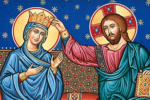
Honoring Our Lady
In honouring Our Lady we wish to show all the respect we have for her, to pay homage to the countless graces that have been granted to her.

Need of discernment of the spirits
This new extended article from Vassula includes contributions from Fr. Joseph Iannuzzi. Many people unfortunately seem to be deceived following…

Prophecies being realized for these End of Times
by Vassula Among the many messages of True Life in God that have been given to us all these years,…

Some clarifications to understand Interfaith dialogues by Vassula
There is an account in the Medjugorje literature of our Blessed Mother telling the visionaries that a Muslim woman named…

A response to Vassula’s letters on Pope Francis
The following article from Fr Joseph Iannuzzi, S.Th.D. is a response to the two letters Vassula sent out on November…
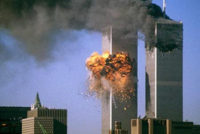
Vassula’s comment on September 11th
Her comment of the ‘9/11’ attacks on the Twin Towers in New York, predicted exactly 10 years to the day before
The Problem of Christian Prophecy
Christianity always carries within it a structure of hope "It is increasingly urgent that the authentic structure of promise and…
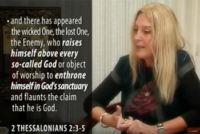
Vassula on Prophecies
(After the tsunami disaster in SE Asia) In this article I will be pointing out the prophecies given to us…

Trinitarian Spirituality of True Life in God
An article about the Trinitarian Spirituality of True Life in God

Beware the Jezebel Spirit
By Vassula Rydén Introduction One reason why God created man was to prove to Satan that not only was it…

Extracts from True Life in God Referencing
Crimes Against the Unborn
Crimes Against the Unborn
In honouring Our Lady we wish to show all the respect we have for her, to pay homage to the countless graces that have been granted to her.
Only what is beyond us brings us together
by Michel Thao Chan President and Founder of Cercle de Réflexion des Nations (CRN), Secretary General of Sino-Europe Development Formation…
The two main pillars
Bishop Antoine Chahda The Syriac Catholic Bishop of Aleppo Ladies and Gentlemen, I would like to start by thanking the…
“The Lord blesses his people with peace” (Psalm 29: 11)
Bishop Selwanos Boutros Alnemeh The Syriac Orthodox Metropolitan of Homs, Hama and Tartus. Which is the Bridge that unites us…
Unity, an Angelic Act
Camel Bechikh Dear friends, committed believers, peacemakers, Each of the spiritualities present here has undergone major stages in its history.…
Where is the problem for reaching peace?
Bishop Isidore Battikha, Archbishop emeritus of Homs, Syria Bishop of Puerto La Cruz, Venezuela Greek-Melkite Catholic Church INTER-RELIGIOUS TALK In…
Speaking in parables
Bishop Isidore Battikha, Archbishop emeritus of Homs, Syria. Bishop of Puerto La Cruz, Venezuela Greek-Melkite Catholic Church Handling such a…
Which is the Bridge that unites us and gives Peace to the World?
Bishop Simon Atallah, oam Bishop Emeritus of Baalbek-Deir El-Ahmar (Maronite), Lebanon, Former President of the Episcopal Committee for Ecumenical Affairs…
Blessed are the peace-makers
+ Bishop Riah Abo El Assal, Anglican Diocese of Jerusalem Jesus said : "Blessed are the peace-makers for they shall…

How to bridge our divisions and bring peace to the world
WELCOME SPEECH OF TELESPHORE P. CARDINAL TOPPO ARCHBISHOP OF RANCHI Dear Brothers and Sisters: Life is a great pilgrimage and…
The question of peace
If people were to seriously heed God’s calling to prayer, all men and women would be saints already. If one…
Bridge to Peace
Vassula's Main Talk at the 2017 True Life in God Ecumenical Pilgrimage in Russia Now we are trying to find…

What is Christmas?
{introduction} Here we are talking about the salvation of mankind and of the Incarnation of Christ, the Son of God,…

The Holy Shroud
Above to the right, a colour image from the Shroud as it appears naturally (unreversed) showing the reddish colour…

The Blasphemy to the Holy Spirit
A reminder to all those who fearlessly persecute the merciful call of God

Vassula’s Interreligious Speech Given at Inauguration Ceremony in Bangladesh, 2011 
Vassula Gave this Speech as She Received Her Third Gold Peace Medal Award for Inter-Religious Harmony and Peace

Iceland Volcano – Prophecy Update and Explanation From Vassula
April 24, 2010 In the wake of the recent eruption of the Eyjafjallajokull volcano in Iceland, Vassula writes this explanation…
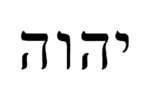
Recognizably Jewish
Written by a hermit nun living in Holywell, Wales, UK, who looks at 'True Life in God' on the basis of her rabbinical studies to which she has been drawn for many years
The Holy Spirit
25 minute talk on the Holy Spirit.
Prophecy and Revelation
A talk given at the conference "The Gifts of the Holy Spirit at the Threshhold of the Second Millenium" in Cattolica, September 18-21, 1998, arranged by "The Movement of Hope."
A Cry from the Sacred Heart: Christ’s Desire for Unity
Vassula's Pilgrimage speech, as delivered on May 25th 2007 at the Adakule Hotel in Turkey.


We are Judged by Love
The Justice and Judgement of God


Mystical Marriage and Divinisation in True Life in God
Written by a hermit nun living in Wales, UK, who contemplates the messages of True Life in God September 2005…

The Day of the Lord
An extract from an interview with Vassula on Voiceamerica Internet Radio from Feb 22, 2005
Renunciation
Welcome Address by Vassula to gathered participants of the 4th Ecumenical TLIG Pilgrimage to Lebanon, Syria and Jordan in May…

The Holy Eucharist
A Reflection by Vassula, February 2005

Consecrated in the Truth
by fr. John Abberton The Gospel According to St. John, Jesus prays to the Father for His disciples: “I have…

Renewal and Teachings of Ascetic Life
by Vassula Greece, Meteora 2004 If we want to truly progress spiritually and follow the Way to become gods by…

Different Ascents: Detachment, Dispassion, Impassibility
by Vassula Greece, Meteora 2004 God always manifested Himself to man, not to give us something new, but to respell…
Inter-Religious Speech by Vassula
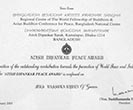
Delivered at the Bouddha Kristi Prachar Sangha at Dharmarjika (Buddhist Monastery) on February 23, 2003

Reconciliation and Unity
by Vassula Egypt, October 21th - 31th 2002 Repentance is the gate that leads souls from darkness into Light. Therefore,…


Discerning Obedience
Vassula writes on the need to discern whether what is being asked or demanded of us is in accordance with God's Will, October 2001


The Real Message of True Life in God
Written by Vassula in May 1997

Vassula experiences Jesus’ Passion
Since receiving the charism of locutions from God, Vassula, on many occasions, has experienced the Passion of Jesus. The following group of accounts is of one of these occasions, experienced just prior to a conference in Omaha, Nebraska in June, 1993.

The Announcement of the Kingdom
Meditation about the Kingdom of God, one of the central themes of the prophetic message.

Unity and Reconciliation
A meditation about these so important themes of Unity and Reconciliation
Reconciliation: the Trinitarian Approach
by Father Vladimir Zielinski (Russian Orthodox) Nicolas Fedorov, the great Russian thinker of the 19th century, says: "Our social program…

Be One in the Divine Trinity
by Fr. Stephen Raphael (Roman Catholic) Introduction We have been moved by the Holy Spirit to come together to this…
The Third Epoch
by Archimandrite Eugene Nicolau (Greek Orthodox) I hope that you can hear me, because I like to have my hands…
The Necessity of Unity
by Archbishop Milingo (Roman Catholic) I deem it a great fortune that I am one of you to-day, in the…
A Prayer for Unity
by Mons. Paolo Maria Hnilica S.J., Bishop of Rusado (Roman Catholic) (As in the case of Fr. Vasile Axinia, at…
The Trinity
by Fr. Rene Laurentin (Roman Catholic) Why I am talking to you today about the Trinity? This brings us closer…
We are called to become gods by participation
by Vassula I want to welcome in the love of God, everyone here. Our Lord is good and He never…
Let us be One in the Divine Trinity
by Vassula Do you know on which grounds our Lord intends to rebuild His Church? I will tell you on…
The Nobility of the Cross
by Vassula In Your great condescendance, You have hymned to us to rejoice us; Like a bridegroom who prepares for…

Union of Divine Love in the Holy Trinity
by Vassula To be bonded to God and obtain a union of divine love in God, we must decide for…

The Great Return
by Vassula The Action of the Holy Spirit The Renewal of the Creation The Great Return You are probably all…

Repentance
by Vassula Egypt, October 21th - 31th 2002 Those who have been reading the messages of TLIG must have noticed…

The Father’s Heart
by Vassula We invoke You, my Yahweh, my Father, for we know that when we do, Your Majesty would come…

Unity from the Heart
by Vassula Holy Land Pilgrimage 1998 Unity will come in the conversion of our heart; that means by our love…

