|
PAGE OPTIONS: PRINT | EMAIL | REPORT ERROR A New Book on Prophecy That Has a chapter On Vassula and a Preface written by the Pope! 2008-03-25
Niels Christian Hvidt's Doctoral Dissertation from the Pontifical Gregorian
University in Rome "Christian Prophecy: the Post-Biblical Tradition" has now
been published with Oxford University Press and is available from www.amazon.com
or directly from www.oup.com
The book will be of great interest and benefit for readers of TLIG. Dr.
Hvidt presents the history of prophecy from the Old Testament,
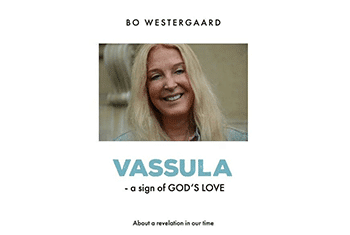
to the New Testament, into the life of the Church. He also has a chapter on
the experience of Vassula Rydén. He describes the various theories of how to
define prophecy in the church and how to respond to the argument that
Revelation is ended with the last apostle and that there can be no more
Christian Prophecy after the closure of the Bible. He shows the impact of
prophecy in the development of dogma and pious traditions and finally deals
with the important criteria for discerning between true and false prophecy.
No other book deals with Christian prophecy in such a thorough way. Written
so that all may understand it, readers can benefit from the entire book or
choose parts of it that hold their special interest.
Furthermore, Cardinal Ratzinger wrote the preface for the dissertation prior
to his election to the Papacy! He recommends all to read it. So do we!
Christian-Prophecy-Post-Biblical-Niels-Hvidt
Amazon's Editorial Reviews:
"That the prophetic impulse has never been silent in the church is widely held but rarely given the scholarly attention it deserves. Hvidt's comprehensive work remedies
that lacuna in the theological literature. More admirably, he articulates the criteria necessary to judge the prophetic claim while demanding that we attend to the prophetic voice. This excellent study is a welcome addition to contemporary theological discussion with special pertinence to any serious work on the theology of revelation." --Lawrence S. Cunningham, John A. O'Brien Professor of Theology, University of Notre Dame
"What is a prophet? Do prophets still exist? How can we distinguish prophet
from charlatan? How does God communicate with the prophet? Is prophecy the main
characteristic of Christian revelation? Are new visions compatible with a definitive
revelation? Can the free and unpredictable features of prophecy be accommodated
within an institution? Niels Christian Hvidt's amazing book replies in depth
to these questions. His historical overview sheds important new light on contemporary
issues. The reader discovers that this book was actually much needed." --Charles Morerod OP, Dean of the Faculty of Philosophy, Angelicum University , authorof Ecumenism and Philosophy
"In this important book, Niels Hvidt focuses on the Catholic theological
blackout on the controversial subject of the charism of prophecy. Hvidt first
surveys the phenomenon of Christian prophecy from the Bible through to the 21st-century figure Vassula Ryden. Then, working carefully and skillfully within the normative parameters of Catholic theology, he links continuing prophecy with the actualization
of revelation in the church. This is an enormously significant contribution
to a generally neglected and difficult subject." -- David
E. Aune, University of Notre Dame, author of Prophecy in the New
Testament and the Ancient Mediterranean World
"Many Christians think that the gift of prophecy, central to God's interaction
with humanity in the Hebrew Bible and the New Testament, ended with the death
of the last of the apostles, so that for almost two millennia the Church has
enjoyed only dubious "private" revelations made to a few individuals
and their immediate followers. Niels Christian Hvidt's ground-breaking historical
and systematic study of prophecy shows that God has continued to speak to the
whole Church through select witnesses in every age without, however, creating a new scriptural canon. This insightful book marks a new stage in the retrieval of the charism
of prophecy and is a major contribution to contemporary discussion of prophecy,
both within Christian theology and in the wider ecumenical perspective." --Bernard McGinn, Naomi Shenstone Donnelley Professor Emeritus, The University of Chicago Divinity School, author of The Presence of God: A History of Western Christian Mysticism
Book Description
Throughout the Hebrew Bible, God guides and saves his people through the words
of his prophets. When the prophets are silenced, the people easily lose their
way. What happened after the incarnation, death and resurrection of Christ?
Did God fall silent? The dominant position in Christian theology is that prophecy
did indeed cease at some point in the past -if not with the Old Testament prophets,
then with John the Baptist, with Jesus, with the last apostle, or with the
closure of the canon of the New Testament. Nevertheless, throughout the history
of Christianity there have always been acclaimed saints and mystics - most
of them women - who displayed prophetic traits. In recent years, the charismatic
revival in both Protestant and Catholic circles has once again raised the question
of the place and function of prophecy in Christianity. Scholarly theological
attitudes toward Christian prophecy range from modest recognition to contempt.
Mainstream systematic theology, both Protestant and Catholic, has mostly marginalized
or ignored the gift of prophecy. In this book, however, Niels Christian Hvidt
argues that prophecy has persisted in Christianity as an inherent and continuous
feature in the life of the church. Prophecy never died, he argues, but rather
proved its dynamism by mutating to meet new historical conditions. He presents
a comprehensive history of prophecy from ancient Israel to the present and
closely examines the development of the theological discourse that surrounds
it. Throughout, though, there is always an awareness of the critical discernment
required when evaluating the charism of prophecy. The debate about prophecy,
Hvidt shows, leads to some profound insights about the very nature of Christianity
and the church. For example, some have argued that Christianity is a perfect
state and that all that is required for salvation is acceptance of its doctrines. Others have emphasized how God continues to intervene and guide his people onto the right path as the full implementation of God's salvation in Christ is still far away. This is the position that Hvidt forcefully and persuasively defends and develops in this ambitious and important work.
About the Author
Niels Christian Hvidt earned his doctoral degree in theology from the Pontifical Gregorian University in Rome and is currently Associate Professor in the Research Unit of Health, Man and Society at the University of Southern Denmark .
Christian-Prophecy-Post-Biblical-Niels-Hvidt
| Other News From 2008-03-25: | A New Book on Prophecy That Has a chapter On Vassula and a Preface written by the Pope!
|
View TLIG Top News... More News in the Archive...
|